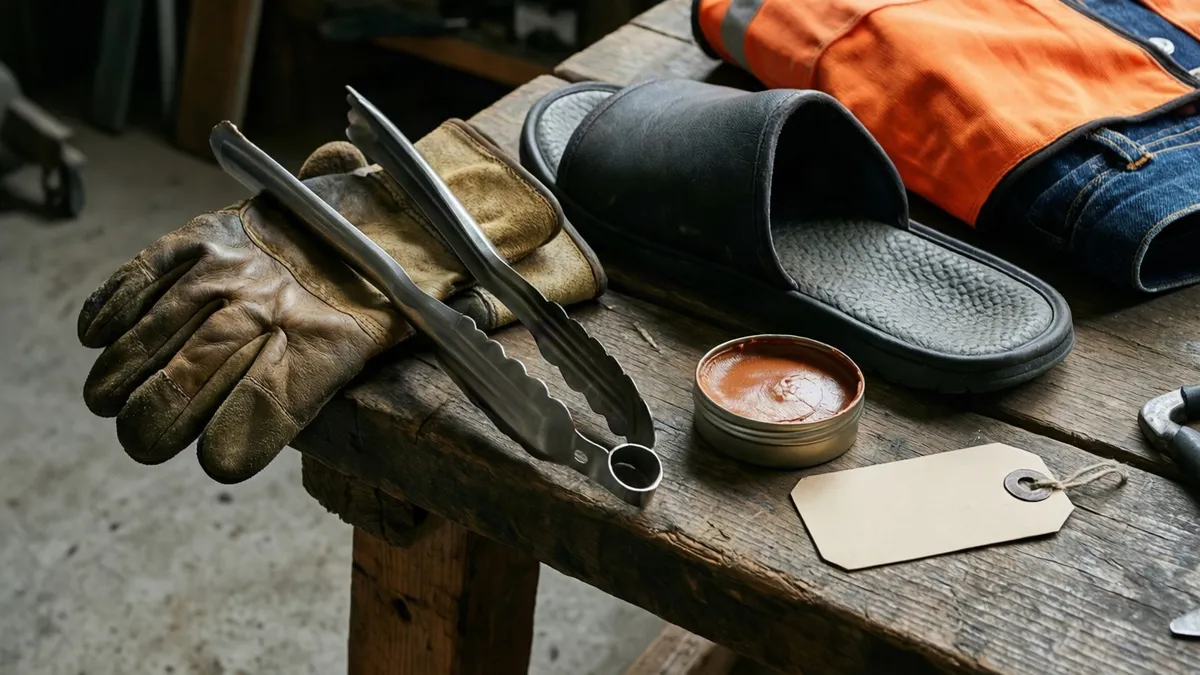
In short: "I don't want anything" means "don't buy me another wallet." Run every candidate through the routine test: does he use something like it daily, and is the current one worn out? If yes, buy the upgrade. If no, buy a consumable or an afternoon out. Skip anything that needs a new habit.
We write buying guides, not bench tests: we have not used every product on this page. Specifications come from the manufacturer or the listing, and prices, availability and ratings change constantly. Whatever Amazon shows when you click is the authoritative figure.
This article contains affiliate links. If you buy through one, we earn a small commission at no extra cost to you. We only recommend what we would suggest to a friend.
The Federal Trade Commission's endorsement guides, 16 CFR Part 255, require a disclosure like that one to be difficult to miss, so it sits above every link here. Our full affiliate disclosure has the rest.
Search for gifts for dad who wants nothing and you get the same dozen products every June. A grill tool set, a wallet, a mug with a joke on it. Those lists are written for a stranger, and you are not shopping for a stranger.
This page sits inside our broader gifts for dad guide, but it starts from the sentence you actually got. Don't get me anything. Take that sentence at face value. Then work through what survives it.
The only gift that survives "I don't want anything" is an upgrade to something he already uses daily. If he would not replace it himself, it is not a gift. It is clutter. Price bands below are ours, not a sourced figure: in our editorial judgment, the sweet spot for this kind of dad runs $25 to $100.
The routine test for a dad who wants nothing
The test is two questions. Does he use something like it every day? Is the current one worn out, broken, or annoying him? Two yeses means buy. One yes means think harder. Zero means skip it.
"I don't want anything" almost never means buy nothing. It means no new habits. He does not want to learn a gadget, store an object, or pretend to like something he will never open. A gift that fits the life he already has does not trigger that resistance.
Here is where the clichés break down. A novelty grill set fails because he already grills with two tools he chose himself. A replacement for the tongs that are bent passes because the routine exists and the tool is the problem.
| Category | Fails the routine test (clutter) | Passes the routine test (gets used) |
|---|---|---|
| Grilling | Novelty spatula with his name on it | Replacement tongs for the bent pair |
| Coffee | A fourth mug with a slogan | The grinder he uses every morning |
| Apparel | A robe he has no reason to wear | Slippers to replace the pair with holes |
| Bar | A decanter set that lives in a cabinet | Glasses to replace the mismatched ones |
| Tools | A multitool he already owns three of | The organizer for the bench he gripes about |
| Tech | A smart speaker he never set up | Headphones for the commute he takes daily |
Our take: The routine test is the only filter that matters here. If you cannot point to the specific worn-out item this gift replaces, switch to a consumable or an experience. The worst gift for a dad who wants nothing is an object that asks him to build a new routine around it.
Our suggested decision checklist, before you buy:
- The thing he already uses daily: ____
- What is wrong with the current one: ____
- What this gift replaces: ____
- Where he will keep it: ____
If line 3 is blank, buy a consumable instead.
Upgrade what he wears out
Apparel is where the routine test is most obvious. A man who wears slippers every evening will not buy himself a new pair when the old ones have holes. He will just keep wearing them. That is the opening.
The slippers with the collapsed heel. The hoodie with the frayed cuffs. The reading glasses he keeps losing because the case fell apart months ago. These are not exciting gifts. They are the gifts that get used the same day he opens them.
A robe sounds good until you check the routine. Does he wear one now? If the answer is no, a robe is a new habit in a box. It will hang on the back of a door for a year and then go to the donation pile. If he does wear one and it is threadbare, replace it. That passes.
Replace the tool he complains about
Every dad has one tool he gripes about but will not replace. The flashlight with the dead battery. The pocket knife that does not lock properly. The drill bit set missing the size he always needs. That complaint is your gift list.
Pocket knives and multitools show up on every gift guide, and that is exactly the problem. If he already carries one, another is clutter. If he does not carry one, he has already decided he does not want to. The exception is the one he carries daily and has mentioned is getting dull or stiff.
Tool organizers work because they solve a complaint, not because they are tools themselves. A magnetic strip for the wrenches that fall off the pegboard. A socket organizer so he stops digging through a drawer. Small, specific, and they fix something that annoys him weekly.
Tech gadgets fail the routine test more often than they pass. A smart speaker he has to set up is a new habit. Noise-canceling headphones for the dad who takes a train or mows the lawn with earbuds that keep falling out, that is an upgrade. The difference is whether the habit already exists.
A smart bird feeder is the rare tech gift that can pass. He watches the yard anyway, and the feeder does not ask him to do anything new. But only if he has mentioned birds, or fills a feeder already. Otherwise it is a gadget he will set up once and forget.
A bidet attachment sounds like a gag gift, but the routine test works here. He uses the toilet every day, and the upgrade is genuinely better. He will not buy one himself. That is the whole point.
Make the daily cup better
Coffee gifts fail the routine test when they add objects. A fifth mug does not help. A decorative sign about coffee does not help. What helps is making the cup he already drinks taste better or cost less.
If he buys coffee from a shop every morning, a bag of beans from a roaster he has not tried is a consumable that disappears. No shelf space. If he makes coffee at home with a blade grinder that produces uneven grounds, a burr grinder is the upgrade he will notice but will not buy himself. The routine is there. The tool is the bottleneck.
A coffee subscription works the same way, but check whether he already has one. Two subscriptions arriving on different schedules means beans going stale, and stale beans defeat the purpose.
The bar category works identically. A decanter is furniture. Whiskey glasses to replace the mismatched ones in his cabinet pass the test. Whiskey stones are a judgment call: if he drinks neat and complains about ice diluting it, they solve a problem. If he drinks with ice, they are a solution to a problem he does not have.
Grill gear he won't buy himself
Grilling is the most over-gifted category in June, and it fails the routine test almost every time. A three-piece tool set in a case is clutter if he already grills with two tools he bought himself. A novelty spatula with his name laser-etched on it is clutter under any circumstances.
What passes is replacement gear for the stuff that is actually worn out. The tongs that are bent and do not close properly. The grill brush with the melted bristles. The thermometer that takes thirty seconds to read and has him opening the lid repeatedly.
Grill tongs and an instant-read thermometer are the two upgrades most grillers will not buy themselves. They will use the bent tongs for years. The thermometer is the one tool that changes the result, not just the process.
Planks, rubs, and smoking chips are consumables, which means they belong in the next section. The line is simple: if it stays in the garage after the food is eaten, it is gear. If it disappears with the meal, it is a consumable.
The consumable loophole for dad who wants nothing
Consumables are the escape hatch. They disappear. They do not need a shelf, a hook, or a drawer. For a dad who genuinely does not want objects, this is the category that always works.
Coffee beans, hot sauce, rubs, jerky, chocolate, nuts. The test is not whether he uses something like it daily. The test is whether he will eat or drink it before it goes stale. If yes, it passes.
Meat boxes and snack subscriptions are the larger version of the same idea. They work for a dad who cooks or grazes. They fail for a dad who eats out five nights a week and would let a box of brisket sit in the freezer until it gets freezer burn. Match the consumable to his actual eating habits, not to the version of him who meal-preps on Sundays.
The one risk with consumables is buying something he already has a full supply of. Check the pantry or the liquor cabinet if you can. A dad with twelve bottles of hot sauce does not need a thirteenth, no matter how good it is.
When the answer really is nothing
For a minimalist dad, the answer is an experience. Tickets to a game, a reservation at a restaurant he has mentioned, an afternoon fishing together. These do not enter the house. They do not require storage. They are the one category that honors the sentence without ignoring it.
For a dad who gets upset when you buy him things, stop buying him things. A phone call, a visit, or a card with a specific memory written in it is worth more than anything you can ship. The gesture he wants is your attention, not your money.
New dads are the exception to the "wants nothing" rule. A first-time dad who says he does not want anything is usually exhausted, not minimalist. Food delivery or anything that buys him thirty minutes of sleep passes the routine test, because sleep is the routine he needs most.
Grandpas and retired dads often shift toward simplicity. A digital picture frame loaded with photos of the grandkids passes if he would actually look at it daily. A life story journal passes if he likes to write and has mentioned wanting to record family history. Both fail if they are objects he has to learn to use and will not.
For a dad who lives far away, the consumable loophole and the experience route both work. Ship something he will eat, or book something you can do together the next time you visit. The distance makes the object less useful and the presence more valuable.
Under $20, the routine test still applies. A bag of coffee, a jar of rub, a pair of grill gloves to replace the oven mitt he has been using. Small price, same logic.
How to wrap a non-gift: if the gift is an experience or a phone call, write it on a card. "Dinner at that place, Friday the 14th. I made the reservation." The card is the wrapping. The reservation is the gift. He gets something to open and nothing to store.
Questions people actually ask
What if my dad is a minimalist and doesn't want any physical gifts?
Buy an experience or a consumable, and keep it small. A single bag of coffee from a roaster he follows, or tickets to something you can attend together, both work. The test for a minimalist is stricter: even a consumable should be something he would buy himself, just a better version of it. Avoid anything that arrives in bulky packaging he will have to break down and recycle.
How do I wrap a gift for a dad who says he wants nothing?
Write the gift on a card instead of boxing it. If it is a consumable, skip the gift bag and hand it over in its original packaging with a note taped to it. Dads who say they want nothing usually hate the production of wrapping paper, bows, and tissue as much as the gift itself. A plain bag with his name on it in marker is often the right amount of ceremony.
What are some gifts under $20?
A bag of whole-bean coffee from a roaster he has not tried, or a jar of dry rub for the grill. A pair of heavy-duty grill gloves, or a six-pack of a beer he does not usually buy. All four pass the routine test because they disappear. The threshold to watch is shipping: a $15 item with $8 shipping is really a $23 gift, so look for items that ship free or that you can buy locally.
How do I handle a dad who genuinely gets upset if you buy him anything?
Stop buying. Call him, visit him, or write a letter with a specific memory he would recognize. A dad who gets angry at gifts is often reacting to the feeling that he should be providing, not receiving. Framing the gesture as shared time rather than a transaction sidesteps that entirely. If you must mark the occasion, pay for his lunch next time you are out together and do not call it a gift.
What are some gifts for a dad who is recently retired?
Retirement shifts the daily routine, which means the routine test has new entries. If he has started cooking more, a knife sharpener for the dull chef's knife he has used for twenty years passes. If he is gardening, a replacement for the trowel with the bent handle. If he is reading more, a comfortable reading pillow for the chair he has claimed as his own. The upgrade should match what he does now, not what he did when he was commuting.
What are some gifts for a new dad?
Anything that buys him sleep or time. Food delivery so nobody has to cook, a box of high-quality coffee because he is running on it, or a pair of noise-isolating earbuds for the stroller walks. A new dad who says he wants nothing is almost always saying he is tired. The routine test still applies, but the routine has changed overnight, and sleep is at the center of it.
What are some gifts for a dad who lives far away?
Ship a consumable he will actually use, or plan an experience for the next visit. A bottle of something he likes, a bag of coffee, or a reservation at a restaurant near him that you call ahead and pay for over the phone. The distance makes physical objects less useful because you cannot see whether they get used. A consumable arrives, gets consumed, and is gone, which is the cleanest outcome.
Ray Delgado writes buying guides, not reviews; nothing here was tested by us.
Sources
- Federal Trade Commission — "Guides Concerning the Use of Endorsements and Testimonials in Advertising" (https://www.ftc.gov/legal-library/browse/federal-register-notices/guides-concerning-use-endorsements-testimonials-advertising) "Retrieved 2026-08-23".